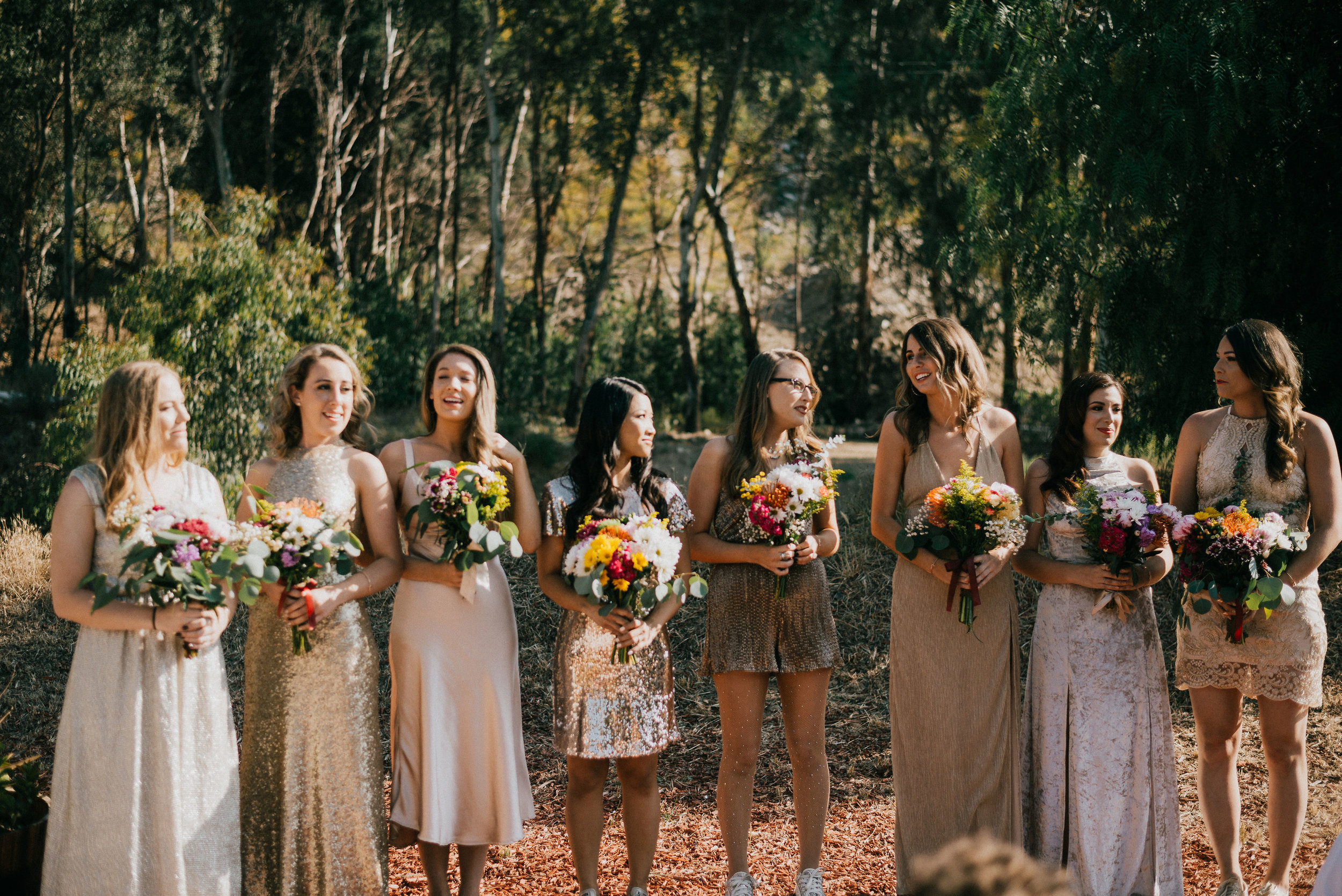

Wedding Vocabulary A-Z
Speak the wedding lingo like a pro! Or maybe just find this list when someone said something you don’t know the meaning of… no matter what brings you here, WELCOME!
Like any industry, the wedding industry has its own unique vocabulary that may seem commonplace to anyone on the inside, but to the many, many that just pop in for a short stint to plan their own wedding is a whole new world! Honestly, wedding planning should really come with a glossary… so we made you one! With our wedding vocabulary glossary you won’t feel left in the dark, in fact, you’ll be speaking the wedding lingo like a pro in no time!
A

Aisle- located between two clusters of seating where the guests will sit during the wedding ceremony, the aisle is the walking space between for the bride, groom, wedding party, and family members that leads to the altar where the ceremony will take place
Aisle runner- a covering, usually cloth or paper, expanding down the length of the aisle. The aisle runner is typically a rug, smother of flower petals, or roll of paper.
Altar- a backdrop for a religious wedding ceremony, typically made of candles, murals, floral arrangements, and/or a podium
Appliqué- a piece of ornate fabric, usually lace, sewn into another fabric to create texture and dimension
Arbor- and arch typically made of a collection of sticks, serves as a space for couples to be married under during outdoor wedding ceremonies
B
Bachelor party- a gathering of the groom-to-be’s closest friends to celebrate their friendship and his upcoming marriage (also called a “Buck’s night”)
Bachelorette party- a gathering of the bride-to-be’s closest friends to celebrate their friendship and her upcoming marriage (also called a “Hen’s night”)
Best man- the groom’s right-hand person, typically their closest friend or family member. This person is asked to stand beside the groom in support on his wedding day and assist with any wedding needs both prior to and on the day of the wedding
Black tie- a dress code in which all of the men wear formal tuxedos and the ladies wear floor length gowns
Black tie optional- a dress code in which men have the option to wear formal tuxedos, but a nice business suit is also acceptable
Bridal bouquet- a collection of flowers tied together, usually with a ribbon, intended for the bride to hold as she walks down the aisle to the wedding ceremony. The flowers symbolize happiness and satisfaction in marriage; the ribbon symbolizes fellowship and strength through community
Bridal shower- a party thrown for a bride-to-be where the guests are expected to “shower” the bride-to-be with gifts
Bride- a woman (or person who identifies as such) who is getting married
Bridesmaid- a close friend or relative of the bride who offers support throughout the wedding planning process and on the wedding day
Bridesmaid bouquet- a collection of flowers tied together intended to be held throughout the wedding ceremony by a bridesmaid
Boutonniere- a flower or small collection of flowers that is pinned to a suit jacket lapel for special occasions (like weddings)
Bouquet- a collection of flowers tied together intended to be held by a bride and/or bridesmaids as a symbol of happiness and good luck for the marriage
Bouquet toss- a tradition that usually occurs during the wedding reception where the single ladies in attendance gather and the bride tosses the bouquet into the crowd. The person who catches the bouquet is said to be married next
Buck’s night- a gathering of the groom-to-be’s closest friends to celebrate their friendship and his upcoming marriage (also called a “bachelor party”)
Buffet- a variety of dishes displayed on tables that guests can create their own plates from. This is a more casual form of serving food
Bustle- the process of pinning or buttoning the train of the bride’s dress higher on her dress to increase her mobility and function
Buttercream- a cake frosting made of whipped butter and sugar. Though it is generally found to be more delicious than fondant, it is known to quickly melt in heat

C
Cake cutting- a tradition that typically occurs during the wedding reception where the bride and groom cut their wedding cake together and take turns feeding the cake to each other
Calligraphy- an artful type of script writing known to convey elegance, often used on wedding invitations
Casual dress- a dress code that allows guests to wear whatever they would like, though dresses and button down shirts are typically still expected
Caterer- a wedding vendor that provides food for the guests. This service can be hired independently or provided through the reception venue
Cathedral- a Christian place of worship that is the seat of a Bishop
Celebrant- a person who is legally authorized to perform, or officiate, a wedding ceremony (also called “officiant”)
Centerpiece- an object placed in the center of a table intended for decorative purposes
Ceremony rehearsal- a practice run of the wedding ceremony, typically held a day or two prior to the wedding, usually followed by a rehearsal dinner
Chapel- a space, other than a courtroom and usually other than a church, where wedding ceremonies regularly take place
Charger- a large, decorative plate that goes beneath a dinner plate
Chuppah- used for Jewish wedding ceremonies, this is a 4 post canopy with fabric draped or stretched around the outside, beneath which a couple is married
Cocktail attire- a dress code that balances between black tie optional and business attire. Men are expected to wear afternoon suits and women are expected to wear nice dresses that are less formal than evening gowns but more formal than sundresses, suits, or skirts with a blazer.
Cocktail hour- an “hour” directly following the wedding ceremony where guests gather to mingle, eat appetizers, and enjoy alcoholic beverages. Typically during this time the bride, groom, wedding party, and immediate family take pictures
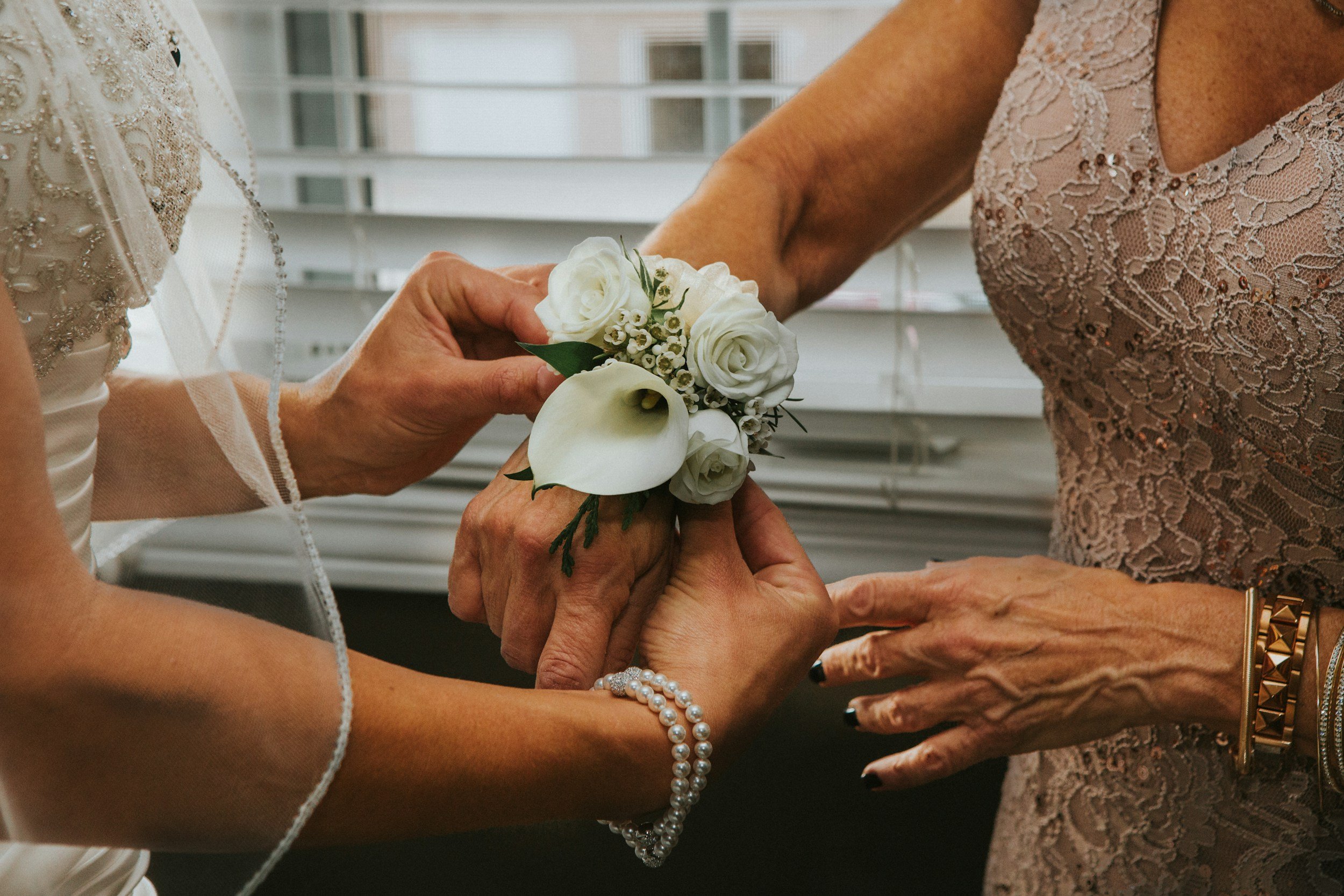
Corsage- a small bouquet of flowers that can be worn on the wrist like a bracelet or pinned to clothes, typically worn by the matriarchs of a family, though on rare occasions bridesmaids will wear them
Cummerbund- a wide waist sash worn with double-breasted tail coats or tuxedos
D
Day of coordinator- a person hired to make sure the wedding plans are carried out. They typically act as the liaison between the timeline, vendors, and wedding party to ensure everyone is in the correct place at the allotted time doing the planned event. They will manage the vendors, communicate with the wedding party, and oversee the evening.
Destination wedding- a wedding taking place at a location where the couple and/or majority of guests must make travel arrangements in order to attend
Dress code- a specification of attire that guests are asked to adhere to

E
Engagement- the relationship between two people who intend to be married. It is also known as the time between a marriage proposal and a wedding
Engagement party- a party held to celebrate a recent engagement. Also serves as an opportunity to introduce members of the merging families and other wedding guests
Engagement pictures- typically a professional photograph, or series of photographs, taken to use for wedding announcements, wedding websites, social media, and/or decorate the wedding reception
Engagement ring- a gift given by one spouse when asking if the other will marry them, it serves as a symbol that the person wearing the ring is to be married
Escort card- a small card that lists a guest's name and their table number for the wedding reception. These are usually placed on a table together where guests will find them before moving to their assigned table
F
Family style- a food serving style where large serving dishes of food are placed on each individual table. The guests are expected to serve themselves and pass the serving trays around the table
Father of the bride (FOB)- just as it sounds, this is the father of the bride. FOB is a typical abbreviation used by wedding vendors and will commonly appear on timelines or other documents created by wedding professionals
Father of the groom (FOG)- just as it sounds, this is the father of the groom. FOG is a typical abbreviation used by wedding vendors and will commonly appear on timelines or other documents created by wedding professionals
Father/daughter dance- a traditional dance between the bride and her father to a meaningful song. It is intended as a celebration of their relationship. Typically no other guests will be on the dance floor, though occasionally the pair will request for other father/daughter couples to join them on the dance floor halfway through the song (See “How to Create a Timeline” for suggestions on timing this event)
Favors- a small gift from the newly weds to the guests to show their appreciation for the guests’ attendance; souvenirs for guests to take as they depart from the wedding
Fiancé (or Fiancee)- a person who is engaged to be married
First dance- typically occurring at the beginning of the wedding reception, this is the first dance that the newly weds will share as a married couple. (See “How to Create a Timeline” for suggestions on timing this event)
Floral arrangement- a collection of flowers specifically and artfully pieced together (See “All Things Wedding Florist” for more information)
Flower girl- a young girl who walks down the aisle before the bride, she will typically scatter flower petals as she walks
Fondant- a smooth cake icing that is rolled out over a cake to give it a smooth appearance
Formal attire- a dress code that is between cocktail attire and black-tie. Feminine attire includes a nice short or long dress made of higher end material, pantsuit, or skirt and blazer. Masculine attire includes a dark suit, tie or bowtie, and white shirt
G

Ganache- a combination of chocolate and heavy cream either used as icing or filling for a cake. They will also have additions like liqueur, vanilla, or fruit flavorings
Garlands- (1) also known as Mala in the Hindi language, used in Hindi weddings, flowers bunched together on a string and worn around the bride’s and groom’s neck (2) a lush leafy and/or flowery vine used as decor
Garter- a piece of bridal lingerie worn around a bride’s upper thigh, under her wedding dress. Traditionally a groom will retrieve the garter and toss it into a crowd of single men (see “Garter Toss”)
Garter toss- after retrieving the garter, the groom will toss or sling-shot the garter into a group of single men that have gathered prior to the garter retrieval. The bachelor that catches the garter is said to be married next
Gift registry- a service provided by websites and/or retail stores for engaged couples to create lists of desired items they would like to receive as wedding gifts and communicate those wishes with their wedding guests
Gobo lighting- a light that shines through a projected image onto a solid surface such as a wall or floor. Typically for weddings couples will use a Gobo to project their monogrammed initials
Golden hour- a time with optimum lighting for photographs that occurs twice a day, one during sunrise and once during sunset. Golden hour typically starts the first 30 minutes after sunrise, the final hour prior to true sunset, though most sunset photo shoots last about 30 minutes after sunset
Grand entrance- a presentation of the newly weds, often the bridal party is included and occasionally close family members are included. This typically occurs directly following cocktail hour and immediately preceding dinner
Grand exit- a formal send-off of the newly weds at the conclusion of the wedding reception. The grand entrance usually includes guests forming a tunnel of aisle for the newly weds to run through before getting into their exit vehicle
Groom- a man (or person who identifies as such) who is getting married
Grooms speech- the groom’s speech is usually made on behalf of himself and his new spouse to thank the guests for attending their wedding, acknowledge the continued support of friends and family, and appreciate his new spouse.
Groomsmen- an attendant to the groom that offers support throughout the wedding planning and wedding day; usually the groom’s closest friends and/or family members
Guest list- a list of individuals invited to a wedding. This list does not include anyone hired to work as a vendor on your wedding day (even if they are friends!)
H
Head table- a table at a wedding reception where the bride, groom, and their wedding party will sit to eat dinner. This table usually faces outwards towards the rest of the guests
Hen’s night- a gathering of the bride-to-be’s closest friends to celebrate their friendship and her upcoming marriage (also called a “bachelorette party”). Hen’s nights traditionally take place on the evening prior to the wedding, but with the rise in popularity of the bachelorette party, Hen’s nights have largely transitioned to earlier dates.
Honeymoon- a vacation taken by the bride and groom following their wedding
Hosted bar- bar drinks available to guests prepaid for by the host(s) of a wedding
Hotel block- an agreement made between the host of a wedding and a hotel to guarantee a predetermined number of rooms at a predetermined rate are available to wedding guests
I
In house catering- catering services provided by a wedding reception venue
Installation- any display, decor, floral or otherwise, that has been placed specifically for a wedding
Invitation- a letter sent providing information and a request for attendance of the recipient to a wedding. The invitation should state the date of the event, address where the event is being held, time they should arrive, and any other pertinent information to your unique event (i.e. dress code, will food be served?, will there be dancing?, is there a wedding website where further information and/or a registry can be found, a map to find the specific location if venue is in a low internet-service area, etc.)
Invitation suite- all of the paper goods sent along with an invitation. This usually includes an RSVP card, meal card, directions to the wedding venue, and any other important information necessary to share with guests
J
Justice of the peace- a court judge with limited legal abilities, but whose abilities include performing marriage ceremonies
K
Ketubah- a Jewish marriage contract that outlines the responsibilities of the groom in relation to the bride
Kickback- an amount of money paid from one vendor to another for a client referral
L
Letterpress- a printing technique by which many copies are made by repeated direct impression of a raised inked surface against sheets or rolls of continuous paper
M
Maid of honor (MOH)- the bride’s right hand person, typically a close friend or family member who participates in the wedding ceremony processional, adjusts the bride’s dress once she arrives at the altar, holds the bride’s bouquet during the ceremony, and offers continued support throughout wedding planning and on the wedding day. The MAID of honor is an unmarried woman.
Master of Ceremonies (MC or Emcee)- A person who speaks through a microphone to provide information and entertainment to guests
Matron of honor- the bride’s right hand person, typically a close friend or family member who participates in the wedding ceremony processional, adjusts the bride’s dress once she arrives at the altar, holds the bride’s bouquet during the ceremony, and offers continued support throughout wedding planning and on the wedding day. The MATRON of honor is a married woman.
Meal card- a card included with the invitations where guests who plan to attend the wedding will specify what meal option they would like
Money dance- a dance where guests take turns offering the bride and groom money in exchange for a quick dance. The money offered is typically pinned to the bride and grooms clothing, though it is occasionally put into baskets, or someone, usually the bride’s mom or an aunt, will pin the money together to form crowns and/or capes for the bride and groom to wear
Mood board- a visual representation of the design vision and inspiration for a wedding. Also called an “inspiration board”
Mother of the bride (MOB)- just as it sounds, this is the mother of the bride. MOB is a typical abbreviation used by wedding vendors and will commonly appear on timelines or other documents created by wedding professionals
Mother of the groom (MOG)- just as it sounds, this is the mother of the groom. MOG is a typical abbreviation used by wedding vendors and will commonly appear on timelines or other documents created by wedding professionals
Mother/son dance- a traditional dance between the groom and his mother to a meaningful song. It is intended as a celebration of their relationship. Typically no other guests will be on the dance floor, though occasionally the pair will request for other mother/son couples to join them on the dance floor halfway through the song
N
Newlyweds- people who have just gotten married. The “newlywed” period begins immediately following the wedding ceremony and extends through the first year of marriage
O
Officiant- any person who performs the role of officiating a legal marriage ceremony (also called “Celebrant,” “Justice of the Peace,” or any religious leader) (See “All Things Wedding Officiant” for more details on this service, questions to ask a potential officiant, & how to proceed once a wedding officiant is booked)
Open bar- a bar serving alcoholic beverages paid for by the host(s) of the wedding
P
Palette- a collection of colors intended to be used in the wedding design (See “Design Building Guide” for more information and guidance on how to select the right color palette for you!)
Place cards- small pieces of paper listing a guests name, placed at their seat. Typically guests will find their name and designated table on a seating chart and upon arriving at their table will look for their place card to locate their exact seat.
Plated dinner- dinner served to seated guests by wait staff. Typically their desired meal will have been specified on their meal card and communicated with the catering service staff prior to the wedding so no one will place orders directly on the wedding day
Place setting- a collection of plates, napkins, place cards, silverware, cups, and occasionally decorative touches at each guests seat
Plus one- an unspecified guest of a wedding guest. The “plus one” is up to the guest’s discretion. This is commonly allotted to guests who are single and/or may not be familiar with many other guests in attendance.
Photo booth- a vending machine or kiosk where guests can take pictures. The pictures are usually printed on strips for guests to take home or sent to them via text or email. Props are usually provided to encourage creativity
Photographer- a professional hired to take pictures throughout the wedding day
Procession- a group of people formally walking down the aisle in a wedding ceremony, typically occurs after all of the guests are seated
Processional- the music played while a group of people (i.e. wedding party, parents or parental figures of the couple, etc.) walk down the aisle in a wedding ceremony
Q
Queen Anne neckline- a high collar in the back, with a dipped cut in the font usually in a V or U shape. Common wedding dress neckline.
R

Reception- a celebration following a marriage ceremony that typically includes food, drinks, and dancing or other entertainment.
Recessional- the part of a wedding ceremony where the wedding party exits the ceremony area
Rehearsal dinner- a dinner directly following the ceremony rehearsal, typically the guests include anyone who attended the ceremony rehearsal and their dates. This usually includes the wedding party and immediate family of bride(s) and/or groom(s)
Ring bearer- a young male child who participates in the wedding ceremony by bringing the rings to the altar
Ring box- a box containing the wedding rings and bands carried by the ring bearer
RSVP- an abbreviation of a french phrase “repondez s’il vous plait,” which in english means “please respond. When this is listed on an invitation it means the guests are expected to confirm or deny their attendance
RSVP card- a card included with the wedding invitation that guests can use to confirm or deny their attendance and mail back to the sender
S
Sample sale- an event where boutiques and wedding dress designers offer the dresses used in their showrooms for bride’s to try on designs or worn at fashion shows at deeply discounted rates
Save the date (STD)- an announcement sent to guests of the wedding date and city. This announcement is sent prior to the invitations. They are often sent once the date is solidified, but other important details are still unknown
Seating chart- a display listing table numbers or names and the guests assigned to each table
Semi-formal attire- a dress code requiring guests to wear something dressier than what they would wear to a business meeting, but less formal than a tuxedo or evening gown
Signature cocktail- a cocktail selected by the bride(s) and/or groom(s) for guests to drink. Often used when the reception bar is limited
Speeches- an address given by important family or friends of the bride(s) and/or groom(s) usually providing well wishes or fond memories with the couple (also called “Toasts”)
Suit- a formal three piece outfit composed of dress pants, formal jacket, and nice button up shirt. A suit is less formal than a tuxedo.
Sunset pictures- portraits taken of the bride(s) and/or groom(s) during sunset or “golden hour”
Sweetheart table- a special table for newlyweds to sit while eating dinner. This table is usually separated from the other guests, but allows guests a clear view of the couple and vice versa.
T
Table pictures- this is when the newlyweds walk around to the guest tables during dinner and take pictures with the entire table
Tablescape- a cohesive, intentional design of a table decor and place settings.
Toasts- an address given by important family or friends of the bride(s) and/or groom(s) usually providing well wishes or fond memories with the couple (also called “Speeches”)
Trial- a practice run of hair and makeup prior to the wedding day to ensure the hair and makeup teams are prepared with all materials to achieve the desired look, and to confirm the bride is happy with how her desired look translates to her personally
Train- the long back portion of a wedding dress that trails behind the wearer
Tray-passed appetizers- hors d'oeuvres served to guests by wait staff from trays as guests mingle
Trunk show- a special event in which a bridal salon features a particular designer's collection. The bride has a unique opportunity to view and try on wedding dresses straight off the runway before they are available in stores as well as styles from previous seasons
Tulle- a stiff, fine netting-like fabric often used for wedding dresses and veils
Tuxedo- a formal three-five outfit composed of dress pants, matching formal dinner jacket, button up shirt, cummberbund, and tie.
U
Usher- a designated person to escort guests to their seats prior to and during a wedding ceremony
V
Veil- a piece of fabric worn in the brides hair that compliments her dress
Vendor- a professional hired to take care of a specific aspect of the wedding event. Examples of vendors include caterers, wedding planners, rental companies, florists, etc.
Venue- a location that either or both the wedding ceremony and/or reception will take place
Venue walk through- a visit to your wedding venue to map out the day-of plan on site. Typically a venue representative, the couple, their planner, photographer, caterer, and rental company are in attendance.
Videographer- a wedding vendor hired to film the wedding (For more information on this service, the styles of videography, what is common in videography packages, questions to ask a videographer, and what to expect after booking a wedding videographer, check out our blog “All Things Wedding Videography”)
Vows- an exchange of promises between the bride(s) and/or groom(s) during the wedding ceremony
Votives- small candles usually used to accent wedding decor. These candles are larger than tea candles, but smaller and shorter than candle sticks
W

Wedding band- (1) a ring exchanged during the ceremony symbolizing matrimony (2) a group of performers intended to provide musical entertainment during a wedding reception
Wedding ceremony- a legal and/or religious union of two or more people committing their lives
Wedding coordinator- a person hired to make sure the wedding plans are carried out. They typically will manage the vendors, communicate with the wedding party, and manage the timeline (see also “Day-of coordinator”) (For a complete description of this role, questions to ask potential coordinators, & what to expect after booking a wedding coordinator, visit “32 Questions to ask a Wedding Coordinator”)
Wedding dress- a dress worn by a bride at her wedding
Wedding planner- a hired professional who plans and organizes weddings (For more information on the role of a wedding planner, questions to ask a wedding planner prior to booking, and what to expect after booking a wedding planner, check out our blog “Questions to ask a Wedding Planner”)
Wedding website- an online platform specific to a wedding where guests can find important information regarding that wedding
Welcome bag- a collection of useful items gifted to wedding guests upon their arrival to a hotel block. This bag usually includes items relevant to the couple, the wedding, and/or the city the guests are staying in
White glove service- a premium service that is expected to be carried out with the utmost attention to detail and care
Y
Yuchid- a Jewish tradition immediately following a wedding ceremony intended to seclude the bride and groom offering them a moment in private

All Things Wedding MC
You spend hours of time, loads of energy, and a lot of money making sure your wedding day will be perfect. As you work to bring your plans together, your wedding will begin to develop a personality (aka a vibe, feel, or mood). Usually the personality your wedding takes on is a reflection of your own. As the primary source of communication to guests, a professional MC conveys this personality to the guests. Of course this person isn’t you and they will have their own unique personality to bring to the table, but it is important to find a professional who will accurately represent you, your fiance, and your wedding vision! Follow this guide to make sure you feel confident in the MC you select!
This guide is divided into 3 sections:
Things to know and consider prior to booking a wedding MC
Questions to ask an MC prior to booking
Ways to maximize your MC’s services
You spend hours of time, loads of energy, and a lot of money making sure your wedding day will be perfect. As you work to bring your plans together, your wedding will begin to develop a personality. Usually the personality your wedding takes on is a reflection of your own. As the primary source of communication to all wedding attendees, a professional MC conveys this personality to everyone. Though this person will bring their own unique charisma to the table, it is important to find a professional who will accurately represent you, your fiance, and your wedding vision! Follow this guide to make sure you feel confident in the MC you select!
This guide is divided into 3 sections:
Things to know and consider prior to booking a wedding MC
Questions to ask an MC prior to booking
Ways to maximize your MC’s services
Things to know and consider prior to booking a wedding MC
What is an MC? An MC (Emcee), or Master of Ceremonies, is essentially the voice of your wedding. They are the liaison between you, your vendors, your timeline, and the guests. Not to be confused with a coordinator, who communicates between you and your vendors to make sure everything is running smoothly and on time, an MC communicates between the coordinator and guests to keep everyone informed of what will happen next. In addition to making important announcements, they typically also provide an element of entertainment to the guests.
You need someone to MC. The role that an MC plays is a big piece of what separates a wedding from any other event. Even if you aren’t interested in hiring an MC as an entertainer, someone will still need to be designated to make announcements. Without an MC the guests, or even you, might not know what to do at any particular time. For example, the MC will direct people from one area to another (ceremony, to cocktail hour, to reception, to dancing, etc.), release tables to take turns at a buffet, announce when the bar is open and closed, introduce special events (i.e. the grand entrance, special dances, toasts, etc.), and bring energy to the dance floor!
Typically your musician will double as, or provide, an MC, but this isn’t always the case. Typically the DJ or lead singer of a wedding band will serve as an MC. If they don’t personally act as an MC, they usually offer an MC as an add-on to their services. Sometimes these professionals don’t include or offer options for this service, and you will need to find a professional on your own. In some cases, even if your musician can MC, a separate professional may be necessary if announcements need to made in multiple languages. When booking a musician, inquire about their MC work, and/or request an MC that is bilingual if necessary.
Professionals specializing MC work usually have a very specific style. Some people specialize in wedding MCing, but it is more common to find an MC who specializes in events as a general category. While anyone MCing will have their own “microphone voice,” professionals who specialize in this kind of work tend to have more niche styles. A professional MC may host game night at a local bar, fashion shows, bingo nights, drag shows, standup comedy shows, etc., all of which require a niche persona. This means they are likely to have a specific MC style that may or may not work for you. You can judge this based on samples of their work they provide, how they speak on the phone, or by attending an event they are hosting prior to booking.
Some MCs double as musicians; proceed with caution. Not to be confused with musicians who double as an MC, some professional MCs also dabble in music on the side and may want to do a performance at your wedding. Again, be sure to check out samples of their work to make sure this is something you are comfortable with! Sometimes it works out amazingly, and they offer an incredible show to guests. Sometimes it goes less than stellar. Do your due diligence and make sure any performance they will do will go over well with your specific crowd.
Some MCs double as comedians; proceed with caution. MCs are almost always at least a little funny and charismatic. This makes for a great host! Guests don’t want to hear a monotone voice making bland announcements. Often lack of character allows for announcements to go unheard, as even an amplified monotone voice is easily lost in the noise of the crowd. However, there is a difference between a little bit of charming humor and a full on stand up routine. Even if you love comedy and a full stand up routine sounds awesome, make sure that their sense of humor is in line with what you envisioned for your wedding!
An MC is an entertainer, but they shouldn’t steal the show. As the host of your wedding, an MC is expected to provide entertainment for guests. This may include walking around to guests and asking them questions about the newlyweds, encouraging guests to dance, or making announcements in an upbeat and engaging way. There is an incredible finesse required to provide entertainment without making the day about themselves. This is easily avoided by checking out their work prior to booking!
MCs don’t usually provide their own sound equipment. Since it is unusual for MCs to provide their own sound equipment, you will need to source this elsewhere. Typically your DJ, venue, or wedding band will provide the sound equipment. Make sure that whoever is providing sound equipment is on board with sharing. If none of these vendors are supplying a sound system, you will need to source it elsewhere so music and announcements can be heard throughout your event space.
Meet with a potential MC you are interested in on the phone or in person and pay attention to their speaking voice. Listen to the cadence of their voice. Pay attention to their energy, word choice, personality, and overall sound they produce when they speak. This will provide a lot more insight into their MC style than any single question ever could. If the person is engaging, interesting, and professional in a meeting, there is a good chance those qualities will carry over to their MC work.
Don’t just read reviews, read into reviews. An MC may have five stars across all review platforms, but that doesn’t necessarily mean they are a good fit for you. While this is true for all vendors, it is especially true for MCs because their work style is so subjective. Look for trends in the reviews that can provide a little more insight into what this professional's work style is like. For example, if you see multiple 5 star reviews that consistently say something to the effect of “they playfully teased all of our guests and did a lot of funny celebrity impressions,” recurring throughout reviews, that person is probably going to perform similarly at your wedding. Other couples may have loved this and left all five star reviews, but if the thought of your guests being the butt of a joke and having to listen to celebrity impressions all night makes you cringe, that professional isn’t going to be the right fit for you.
Questions to ask prior to booking an MC
Basics-
Are you available on my date?
Can you work within my budget?
Do you require a deposit? How much?
When is the balance due?
What is your preferred method of payment?
What is your cancellation policy if I cancel?
What is your cancellation policy if you cancel?
What is your rescheduling policy if I need to change my date?
What is the backup plan if you are personally unable to fulfill your contract due to a last minute conflict?
Are there any additional fees, such as travel fees, that are not included in the package price?
Are you licensed?
Are you insured? Does the insurance cover all of your staff and property?
Experience & style-
How long have you been a professional MC?
Do you specialize in a certain type of event?
How long have you been MCing weddings?
How many weddings have you MCd?
How would you describe your MC style?
What makes you stand apart from other MCs?
Are you open to hosting games or special events we have planned?
Do you offer any additional services or typically do special performances?
Have you worked at our venue before? (Hint: This is particularly important if the venue includes a house sound system. An MC that is familiar with your venue and their system will be familiar with how to start up the system and quicker able to troubleshoot, should any issues arise.)
Have you worked with our musician(s) before?
If applicable, can you make announcements in English and another language? (Hint: Typically at multicultural events a special MC will be hired to make announcements so that all of the guests can understand. Usually these MCs will make announcements in English and your preferred language, but some MCs will only make announcements in the language you have specifically hired them for. This can pose an issue if some guests don’t speak this language, and creates the same problem they were hired to alleviate in the first place! Make sure that someone is available to translate for guests so everyone is in the know for important events!)
Can we see videos of you hosting a previous event or attend a live event that you are MCing?
Logistics-
Do you provide your own sound equipment?
If you do provide sound equipment, will our guests have access to your microphone for speeches/toasts?
If we decide we want the party to last longer, can we add extra hours onto our package on the night of the wedding?
What is the rate for additional hours?
Do you require breaks?
Do you require a vendor meal?
Will you MC any other events throughout our wedding weekend?
Ways to maximize your MC’s services
Set up a phone or in person meeting prior to the wedding to go over all of the details. It is important that the MC is well versed in all of your wedding day plans so they can do their job to the best of their ability. In order to set themselves up for success, most MCs will require either a phone or in person meeting prior to your wedding to go over the details. If they don’t require a meeting, arrange one yourself! Everyone will be better off if the details are reviewed together in advance. This meeting will be most beneficial within the final week or two of your wedding. As you finalize planning details, slight things may shift. Set up your meeting with your MC as close to your wedding as possible (without it being so close that the MC doesn’t have time to prepare and you feel overwhelmed with a lot of last minute to-do’s) to ensure they are receiving the most finalized and accurate information regarding your wedding plans.
Send the MC your timeline prior to having a final details meeting with them about your wedding plans. This will give the MC an opportunity to look through the timeline and prepare any questions they may have for you. The MC will need to be familiar with the timeline to make sure they understand the flow of the evening, when to make announcements, and, on the day of your wedding, know when to check in with your coordinator and other vendors to make sure everyone is ready for the next scheduled event prior to making the announcement.
Specify how you, the newlyweds, would like to be referred to. Your MC will be announcing, at least referring to you, several times throughout the evening. Make sure you specify what you’d like to be called as a couple. While traditionally newlyweds used to be referred to as “Mr. and Mrs. [man’s full name here]” that isn’t always the case anymore. With so much variation in who can be married and the dynamic between couples shifting, weddings have come a long way from the days where new couples were introduced as “Mr. & Mrs. John Smith!” Some other alternatives include just your first names, “the newlyweds,” “the Smith’s,” “John & Philip Smith,” etc.
If you need your MC to announce any names, spell the names out phonetically. Even simple names get mispronounced on occasion. An easy way to avoid this is to write out the phonetic spelling next to the names so the MC knows exactly how to say the names (i.e. Mary = M-air-ee). Write out your name, your fiance's name, and your last name(s) phonetically so the MC pronounces them correctly all evening long. Even if you talk to your MC many times and you and/or they say your names repeatedly, it is YOUR special day and your names are worth guaranteeing correct pronunciation! Usually more than just the newlywed’s names will be announced at some point during the wedding. Important guests will give speeches and often newlyweds want to include additional people in the grand entrance (i.e. the wedding party, immediate family members, sponsors, etc.). Provide these names in writing with specifications on how to pronounce them, so everybody’s name is announced correctly!
Thoroughly discuss any announcements your MC will need to make. Prior to the wedding, you will likely plan and predetermine specific announcements that will need to be made. Make sure to provide these announcements in writing to your MC. The timeline is the perfect place to write out the specific announcements so the MC can track exactly when announcements are intended to be made. Be sure to discuss all of the announcements with your MC. Let them know if you want the exact wording you have provided, or if they have a little leeway on what should be said.
Let the MC know ahead of time when to NOT speak. Some people only want the MC to speak when it is time for designated announcements. Others want entertainment all throughout the event. Many people want something in between. If there are any times throughout the night you’d rather the MC keep to themselves (i.e. special dances, the duration of dinner, the duration of cocktail hour, etc.) let them know ahead of time. If the MC isn’t given any specifications of when to keep quiet, they may feel the need to fill in gaps by telling jokes, narrating special events (i.e. “wow look at that twirl,” “Oh they’re going for dip,” “smash the cake!!”, etc.), or engaging guests on the microphone (i.e. inquiring about how they know the couple, asking for a random guest to provide relationship advice, asking for a quick impromptu speech from a random guest, etc.). All of these examples are fairly typical of an MC, so they can’t be blamed for doing any of this if they haven’t been told otherwise!
Discuss specific jokes, questions, games, etc. that you’d like included with your MC. If there is anything specific or out of the norm you’d like included at some point at your wedding, let the MC know! If you want any games, specific forms of guest engagement, or other out-of-the-norm approaches to entertainment make sure the MC knows ahead of time so they can prepare accordingly! While the examples listed under #6 are not out of the norm for MCs, they also shouldn’t be expected unless you specify you would like them to engage and entertain guests in these ways.
Be sure to inform the MC of any “don’t breach topics.” If there is anything that should never, ever be brought up with your family or guests LET THE MC KNOW! There is nothing worse than an MC making a statement, telling a joke, or asking a question and it being followed by a dramatic, awkward pause amongst the crowd! The best way to avoid this is to let them know about any “don’t go there topics” ahead of time. Even if it feels like an overshare, it will be better for everyone in the end if the MC knows what topics to avoid.
Specify who should and should not be given a microphone. It is fairly common for a distant relative or friend to suddenly become inspired and want to give an impromptu speech at a wedding (especially once the alcohol starts flowing). Some couples are happy to open the floor to anyone who wants to give a toast, while others strictly want to stick to the planned speeches. There are any number of reasons for either of these approaches, but if you anticipate any guests becoming an issue, make sure your MC knows who, under no circumstances, should never get a hold of the microphone.
Provide all information in writing. While a phone or in person meeting is of the utmost importance, it is equally important to write down all instructions, wants, dislikes, etc. for your MC. While it is important that information is provided in writing for all vendors, it is especially important for your MC, because their mistakes are amplified (literally, via the microphone). If your caterer forgets to set out appetizer plates, they can quickly fix the problem with minimal guests noticing. If your MC messes up your last name, everyone will be aware. Your MC will likely be pouring over your written notes prior to the wedding in order to prepare, but will typically bring all of the notes with them to make sure everything is going the way you discussed! Little details are much more likely to slip by the wayside if they don’t have written notes and are simply trying to remember everything you said in a phone conversation! This will also help if your coordinator or a guest approach the MC to inquire why they are or are not doing something. If the MC has specific instructions in writing that they are not supposed to tell jokes or engage with guests during dinner they can prove they are doing their job exactly as you wanted!