
Wedding Vocabulary A-Z
Speak the wedding lingo like a pro! Or maybe just find this list when someone said something you don’t know the meaning of… no matter what brings you here, WELCOME!
Like any industry, the wedding industry has its own unique vocabulary that may seem commonplace to anyone on the inside, but to the many, many that just pop in for a short stint to plan their own wedding is a whole new world! Honestly, wedding planning should really come with a glossary… so we made you one! With our wedding vocabulary glossary you won’t feel left in the dark, in fact, you’ll be speaking the wedding lingo like a pro in no time!
A

Aisle- located between two clusters of seating where the guests will sit during the wedding ceremony, the aisle is the walking space between for the bride, groom, wedding party, and family members that leads to the altar where the ceremony will take place
Aisle runner- a covering, usually cloth or paper, expanding down the length of the aisle. The aisle runner is typically a rug, smother of flower petals, or roll of paper.
Altar- a backdrop for a religious wedding ceremony, typically made of candles, murals, floral arrangements, and/or a podium
Appliqué- a piece of ornate fabric, usually lace, sewn into another fabric to create texture and dimension
Arbor- and arch typically made of a collection of sticks, serves as a space for couples to be married under during outdoor wedding ceremonies
B
Bachelor party- a gathering of the groom-to-be’s closest friends to celebrate their friendship and his upcoming marriage (also called a “Buck’s night”)
Bachelorette party- a gathering of the bride-to-be’s closest friends to celebrate their friendship and her upcoming marriage (also called a “Hen’s night”)
Best man- the groom’s right-hand person, typically their closest friend or family member. This person is asked to stand beside the groom in support on his wedding day and assist with any wedding needs both prior to and on the day of the wedding
Black tie- a dress code in which all of the men wear formal tuxedos and the ladies wear floor length gowns
Black tie optional- a dress code in which men have the option to wear formal tuxedos, but a nice business suit is also acceptable
Bridal bouquet- a collection of flowers tied together, usually with a ribbon, intended for the bride to hold as she walks down the aisle to the wedding ceremony. The flowers symbolize happiness and satisfaction in marriage; the ribbon symbolizes fellowship and strength through community
Bridal shower- a party thrown for a bride-to-be where the guests are expected to “shower” the bride-to-be with gifts
Bride- a woman (or person who identifies as such) who is getting married
Bridesmaid- a close friend or relative of the bride who offers support throughout the wedding planning process and on the wedding day
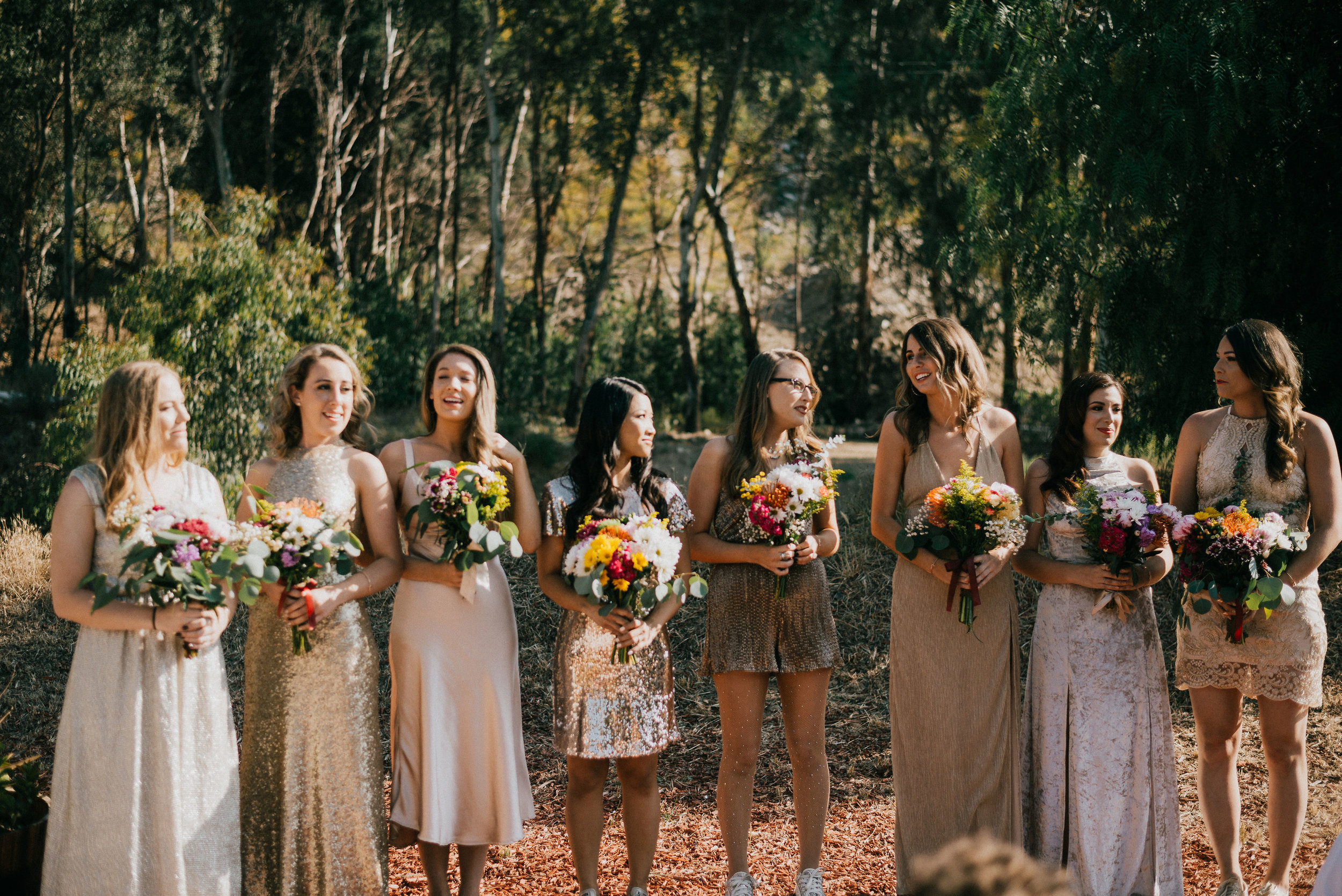
Bridesmaid bouquet- a collection of flowers tied together intended to be held throughout the wedding ceremony by a bridesmaid
Boutonniere- a flower or small collection of flowers that is pinned to a suit jacket lapel for special occasions (like weddings)
Bouquet- a collection of flowers tied together intended to be held by a bride and/or bridesmaids as a symbol of happiness and good luck for the marriage
Bouquet toss- a tradition that usually occurs during the wedding reception where the single ladies in attendance gather and the bride tosses the bouquet into the crowd. The person who catches the bouquet is said to be married next
Buck’s night- a gathering of the groom-to-be’s closest friends to celebrate their friendship and his upcoming marriage (also called a “bachelor party”)
Buffet- a variety of dishes displayed on tables that guests can create their own plates from. This is a more casual form of serving food
Bustle- the process of pinning or buttoning the train of the bride’s dress higher on her dress to increase her mobility and function
Buttercream- a cake frosting made of whipped butter and sugar. Though it is generally found to be more delicious than fondant, it is known to quickly melt in heat

C
Cake cutting- a tradition that typically occurs during the wedding reception where the bride and groom cut their wedding cake together and take turns feeding the cake to each other
Calligraphy- an artful type of script writing known to convey elegance, often used on wedding invitations
Casual dress- a dress code that allows guests to wear whatever they would like, though dresses and button down shirts are typically still expected
Caterer- a wedding vendor that provides food for the guests. This service can be hired independently or provided through the reception venue
Cathedral- a Christian place of worship that is the seat of a Bishop
Celebrant- a person who is legally authorized to perform, or officiate, a wedding ceremony (also called “officiant”)
Centerpiece- an object placed in the center of a table intended for decorative purposes
Ceremony rehearsal- a practice run of the wedding ceremony, typically held a day or two prior to the wedding, usually followed by a rehearsal dinner
Chapel- a space, other than a courtroom and usually other than a church, where wedding ceremonies regularly take place
Charger- a large, decorative plate that goes beneath a dinner plate
Chuppah- used for Jewish wedding ceremonies, this is a 4 post canopy with fabric draped or stretched around the outside, beneath which a couple is married
Cocktail attire- a dress code that balances between black tie optional and business attire. Men are expected to wear afternoon suits and women are expected to wear nice dresses that are less formal than evening gowns but more formal than sundresses, suits, or skirts with a blazer.
Cocktail hour- an “hour” directly following the wedding ceremony where guests gather to mingle, eat appetizers, and enjoy alcoholic beverages. Typically during this time the bride, groom, wedding party, and immediate family take pictures
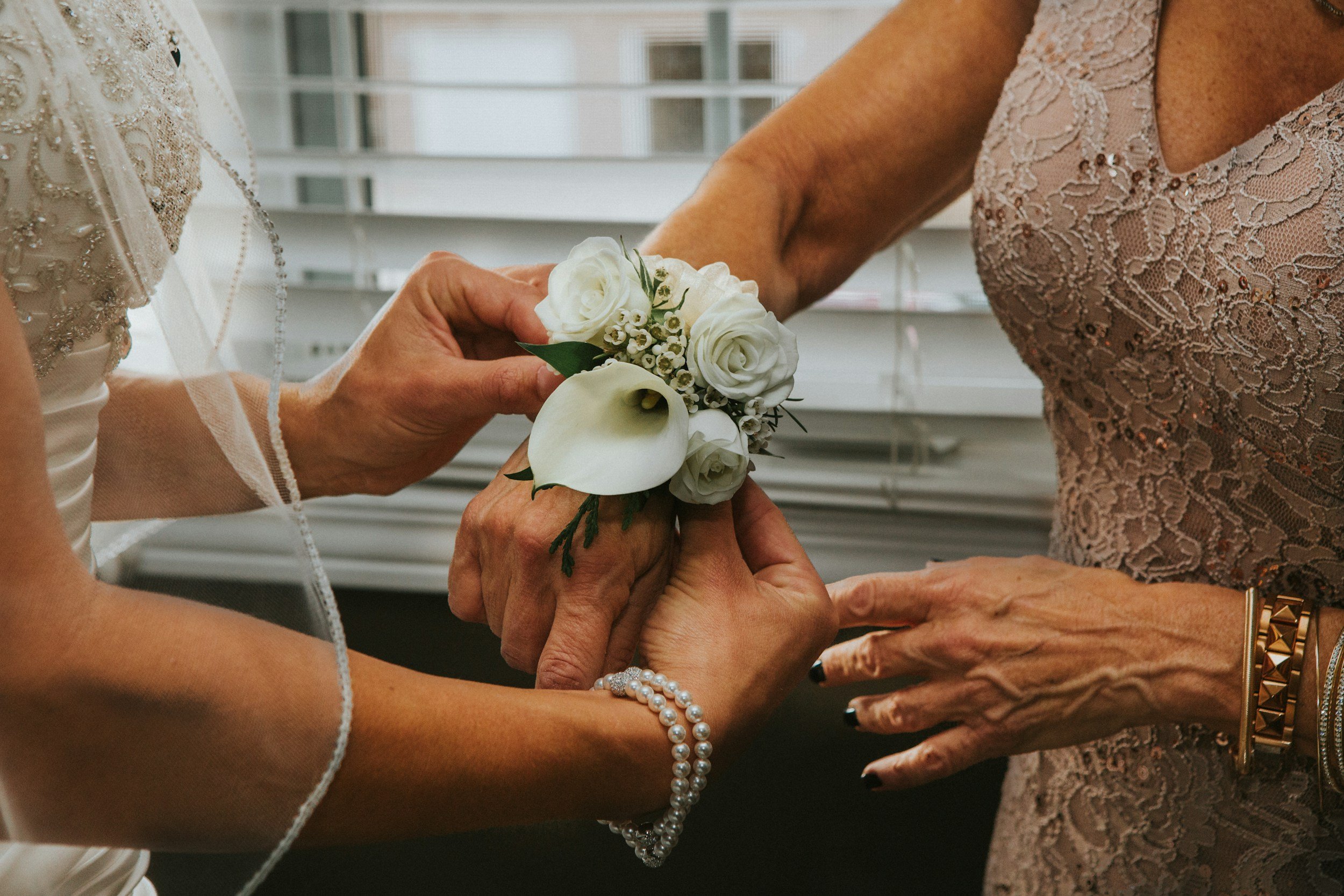
Corsage- a small bouquet of flowers that can be worn on the wrist like a bracelet or pinned to clothes, typically worn by the matriarchs of a family, though on rare occasions bridesmaids will wear them
Cummerbund- a wide waist sash worn with double-breasted tail coats or tuxedos
D
Day of coordinator- a person hired to make sure the wedding plans are carried out. They typically act as the liaison between the timeline, vendors, and wedding party to ensure everyone is in the correct place at the allotted time doing the planned event. They will manage the vendors, communicate with the wedding party, and oversee the evening.
Destination wedding- a wedding taking place at a location where the couple and/or majority of guests must make travel arrangements in order to attend
Dress code- a specification of attire that guests are asked to adhere to

E
Engagement- the relationship between two people who intend to be married. It is also known as the time between a marriage proposal and a wedding
Engagement party- a party held to celebrate a recent engagement. Also serves as an opportunity to introduce members of the merging families and other wedding guests
Engagement pictures- typically a professional photograph, or series of photographs, taken to use for wedding announcements, wedding websites, social media, and/or decorate the wedding reception
Engagement ring- a gift given by one spouse when asking if the other will marry them, it serves as a symbol that the person wearing the ring is to be married
Escort card- a small card that lists a guest's name and their table number for the wedding reception. These are usually placed on a table together where guests will find them before moving to their assigned table
F
Family style- a food serving style where large serving dishes of food are placed on each individual table. The guests are expected to serve themselves and pass the serving trays around the table
Father of the bride (FOB)- just as it sounds, this is the father of the bride. FOB is a typical abbreviation used by wedding vendors and will commonly appear on timelines or other documents created by wedding professionals
Father of the groom (FOG)- just as it sounds, this is the father of the groom. FOG is a typical abbreviation used by wedding vendors and will commonly appear on timelines or other documents created by wedding professionals
Father/daughter dance- a traditional dance between the bride and her father to a meaningful song. It is intended as a celebration of their relationship. Typically no other guests will be on the dance floor, though occasionally the pair will request for other father/daughter couples to join them on the dance floor halfway through the song (See “How to Create a Timeline” for suggestions on timing this event)
Favors- a small gift from the newly weds to the guests to show their appreciation for the guests’ attendance; souvenirs for guests to take as they depart from the wedding
Fiancé (or Fiancee)- a person who is engaged to be married
First dance- typically occurring at the beginning of the wedding reception, this is the first dance that the newly weds will share as a married couple. (See “How to Create a Timeline” for suggestions on timing this event)
Floral arrangement- a collection of flowers specifically and artfully pieced together (See “All Things Wedding Florist” for more information)
Flower girl- a young girl who walks down the aisle before the bride, she will typically scatter flower petals as she walks
Fondant- a smooth cake icing that is rolled out over a cake to give it a smooth appearance
Formal attire- a dress code that is between cocktail attire and black-tie. Feminine attire includes a nice short or long dress made of higher end material, pantsuit, or skirt and blazer. Masculine attire includes a dark suit, tie or bowtie, and white shirt
G

Ganache- a combination of chocolate and heavy cream either used as icing or filling for a cake. They will also have additions like liqueur, vanilla, or fruit flavorings
Garlands- (1) also known as Mala in the Hindi language, used in Hindi weddings, flowers bunched together on a string and worn around the bride’s and groom’s neck (2) a lush leafy and/or flowery vine used as decor
Garter- a piece of bridal lingerie worn around a bride’s upper thigh, under her wedding dress. Traditionally a groom will retrieve the garter and toss it into a crowd of single men (see “Garter Toss”)
Garter toss- after retrieving the garter, the groom will toss or sling-shot the garter into a group of single men that have gathered prior to the garter retrieval. The bachelor that catches the garter is said to be married next
Gift registry- a service provided by websites and/or retail stores for engaged couples to create lists of desired items they would like to receive as wedding gifts and communicate those wishes with their wedding guests
Gobo lighting- a light that shines through a projected image onto a solid surface such as a wall or floor. Typically for weddings couples will use a Gobo to project their monogrammed initials
Golden hour- a time with optimum lighting for photographs that occurs twice a day, one during sunrise and once during sunset. Golden hour typically starts the first 30 minutes after sunrise, the final hour prior to true sunset, though most sunset photo shoots last about 30 minutes after sunset
Grand entrance- a presentation of the newly weds, often the bridal party is included and occasionally close family members are included. This typically occurs directly following cocktail hour and immediately preceding dinner
Grand exit- a formal send-off of the newly weds at the conclusion of the wedding reception. The grand entrance usually includes guests forming a tunnel of aisle for the newly weds to run through before getting into their exit vehicle
Groom- a man (or person who identifies as such) who is getting married
Grooms speech- the groom’s speech is usually made on behalf of himself and his new spouse to thank the guests for attending their wedding, acknowledge the continued support of friends and family, and appreciate his new spouse.
Groomsmen- an attendant to the groom that offers support throughout the wedding planning and wedding day; usually the groom’s closest friends and/or family members
Guest list- a list of individuals invited to a wedding. This list does not include anyone hired to work as a vendor on your wedding day (even if they are friends!)
H
Head table- a table at a wedding reception where the bride, groom, and their wedding party will sit to eat dinner. This table usually faces outwards towards the rest of the guests
Hen’s night- a gathering of the bride-to-be’s closest friends to celebrate their friendship and her upcoming marriage (also called a “bachelorette party”). Hen’s nights traditionally take place on the evening prior to the wedding, but with the rise in popularity of the bachelorette party, Hen’s nights have largely transitioned to earlier dates.
Honeymoon- a vacation taken by the bride and groom following their wedding
Hosted bar- bar drinks available to guests prepaid for by the host(s) of a wedding
Hotel block- an agreement made between the host of a wedding and a hotel to guarantee a predetermined number of rooms at a predetermined rate are available to wedding guests
I
In house catering- catering services provided by a wedding reception venue
Installation- any display, decor, floral or otherwise, that has been placed specifically for a wedding
Invitation- a letter sent providing information and a request for attendance of the recipient to a wedding. The invitation should state the date of the event, address where the event is being held, time they should arrive, and any other pertinent information to your unique event (i.e. dress code, will food be served?, will there be dancing?, is there a wedding website where further information and/or a registry can be found, a map to find the specific location if venue is in a low internet-service area, etc.)
Invitation suite- all of the paper goods sent along with an invitation. This usually includes an RSVP card, meal card, directions to the wedding venue, and any other important information necessary to share with guests
J
Justice of the peace- a court judge with limited legal abilities, but whose abilities include performing marriage ceremonies
K
Ketubah- a Jewish marriage contract that outlines the responsibilities of the groom in relation to the bride
Kickback- an amount of money paid from one vendor to another for a client referral
L
Letterpress- a printing technique by which many copies are made by repeated direct impression of a raised inked surface against sheets or rolls of continuous paper
M
Maid of honor (MOH)- the bride’s right hand person, typically a close friend or family member who participates in the wedding ceremony processional, adjusts the bride’s dress once she arrives at the altar, holds the bride’s bouquet during the ceremony, and offers continued support throughout wedding planning and on the wedding day. The MAID of honor is an unmarried woman.
Master of Ceremonies (MC or Emcee)- A person who speaks through a microphone to provide information and entertainment to guests
Matron of honor- the bride’s right hand person, typically a close friend or family member who participates in the wedding ceremony processional, adjusts the bride’s dress once she arrives at the altar, holds the bride’s bouquet during the ceremony, and offers continued support throughout wedding planning and on the wedding day. The MATRON of honor is a married woman.
Meal card- a card included with the invitations where guests who plan to attend the wedding will specify what meal option they would like
Money dance- a dance where guests take turns offering the bride and groom money in exchange for a quick dance. The money offered is typically pinned to the bride and grooms clothing, though it is occasionally put into baskets, or someone, usually the bride’s mom or an aunt, will pin the money together to form crowns and/or capes for the bride and groom to wear
Mood board- a visual representation of the design vision and inspiration for a wedding. Also called an “inspiration board”
Mother of the bride (MOB)- just as it sounds, this is the mother of the bride. MOB is a typical abbreviation used by wedding vendors and will commonly appear on timelines or other documents created by wedding professionals
Mother of the groom (MOG)- just as it sounds, this is the mother of the groom. MOG is a typical abbreviation used by wedding vendors and will commonly appear on timelines or other documents created by wedding professionals
Mother/son dance- a traditional dance between the groom and his mother to a meaningful song. It is intended as a celebration of their relationship. Typically no other guests will be on the dance floor, though occasionally the pair will request for other mother/son couples to join them on the dance floor halfway through the song
N
Newlyweds- people who have just gotten married. The “newlywed” period begins immediately following the wedding ceremony and extends through the first year of marriage
O
Officiant- any person who performs the role of officiating a legal marriage ceremony (also called “Celebrant,” “Justice of the Peace,” or any religious leader) (See “All Things Wedding Officiant” for more details on this service, questions to ask a potential officiant, & how to proceed once a wedding officiant is booked)
Open bar- a bar serving alcoholic beverages paid for by the host(s) of the wedding
P
Palette- a collection of colors intended to be used in the wedding design (See “Design Building Guide” for more information and guidance on how to select the right color palette for you!)
Place cards- small pieces of paper listing a guests name, placed at their seat. Typically guests will find their name and designated table on a seating chart and upon arriving at their table will look for their place card to locate their exact seat.
Plated dinner- dinner served to seated guests by wait staff. Typically their desired meal will have been specified on their meal card and communicated with the catering service staff prior to the wedding so no one will place orders directly on the wedding day
Place setting- a collection of plates, napkins, place cards, silverware, cups, and occasionally decorative touches at each guests seat
Plus one- an unspecified guest of a wedding guest. The “plus one” is up to the guest’s discretion. This is commonly allotted to guests who are single and/or may not be familiar with many other guests in attendance.
Photo booth- a vending machine or kiosk where guests can take pictures. The pictures are usually printed on strips for guests to take home or sent to them via text or email. Props are usually provided to encourage creativity
Photographer- a professional hired to take pictures throughout the wedding day
Procession- a group of people formally walking down the aisle in a wedding ceremony, typically occurs after all of the guests are seated
Processional- the music played while a group of people (i.e. wedding party, parents or parental figures of the couple, etc.) walk down the aisle in a wedding ceremony
Q
Queen Anne neckline- a high collar in the back, with a dipped cut in the font usually in a V or U shape. Common wedding dress neckline.
R

Reception- a celebration following a marriage ceremony that typically includes food, drinks, and dancing or other entertainment.
Recessional- the part of a wedding ceremony where the wedding party exits the ceremony area
Rehearsal dinner- a dinner directly following the ceremony rehearsal, typically the guests include anyone who attended the ceremony rehearsal and their dates. This usually includes the wedding party and immediate family of bride(s) and/or groom(s)
Ring bearer- a young male child who participates in the wedding ceremony by bringing the rings to the altar
Ring box- a box containing the wedding rings and bands carried by the ring bearer
RSVP- an abbreviation of a french phrase “repondez s’il vous plait,” which in english means “please respond. When this is listed on an invitation it means the guests are expected to confirm or deny their attendance
RSVP card- a card included with the wedding invitation that guests can use to confirm or deny their attendance and mail back to the sender
S
Sample sale- an event where boutiques and wedding dress designers offer the dresses used in their showrooms for bride’s to try on designs or worn at fashion shows at deeply discounted rates
Save the date (STD)- an announcement sent to guests of the wedding date and city. This announcement is sent prior to the invitations. They are often sent once the date is solidified, but other important details are still unknown
Seating chart- a display listing table numbers or names and the guests assigned to each table
Semi-formal attire- a dress code requiring guests to wear something dressier than what they would wear to a business meeting, but less formal than a tuxedo or evening gown
Signature cocktail- a cocktail selected by the bride(s) and/or groom(s) for guests to drink. Often used when the reception bar is limited
Speeches- an address given by important family or friends of the bride(s) and/or groom(s) usually providing well wishes or fond memories with the couple (also called “Toasts”)
Suit- a formal three piece outfit composed of dress pants, formal jacket, and nice button up shirt. A suit is less formal than a tuxedo.
Sunset pictures- portraits taken of the bride(s) and/or groom(s) during sunset or “golden hour”
Sweetheart table- a special table for newlyweds to sit while eating dinner. This table is usually separated from the other guests, but allows guests a clear view of the couple and vice versa.
T
Table pictures- this is when the newlyweds walk around to the guest tables during dinner and take pictures with the entire table
Tablescape- a cohesive, intentional design of a table decor and place settings.
Toasts- an address given by important family or friends of the bride(s) and/or groom(s) usually providing well wishes or fond memories with the couple (also called “Speeches”)
Trial- a practice run of hair and makeup prior to the wedding day to ensure the hair and makeup teams are prepared with all materials to achieve the desired look, and to confirm the bride is happy with how her desired look translates to her personally
Train- the long back portion of a wedding dress that trails behind the wearer
Tray-passed appetizers- hors d'oeuvres served to guests by wait staff from trays as guests mingle
Trunk show- a special event in which a bridal salon features a particular designer's collection. The bride has a unique opportunity to view and try on wedding dresses straight off the runway before they are available in stores as well as styles from previous seasons
Tulle- a stiff, fine netting-like fabric often used for wedding dresses and veils
Tuxedo- a formal three-five outfit composed of dress pants, matching formal dinner jacket, button up shirt, cummberbund, and tie.
U
Usher- a designated person to escort guests to their seats prior to and during a wedding ceremony
V
Veil- a piece of fabric worn in the brides hair that compliments her dress
Vendor- a professional hired to take care of a specific aspect of the wedding event. Examples of vendors include caterers, wedding planners, rental companies, florists, etc.
Venue- a location that either or both the wedding ceremony and/or reception will take place
Venue walk through- a visit to your wedding venue to map out the day-of plan on site. Typically a venue representative, the couple, their planner, photographer, caterer, and rental company are in attendance.
Videographer- a wedding vendor hired to film the wedding (For more information on this service, the styles of videography, what is common in videography packages, questions to ask a videographer, and what to expect after booking a wedding videographer, check out our blog “All Things Wedding Videography”)
Vows- an exchange of promises between the bride(s) and/or groom(s) during the wedding ceremony
Votives- small candles usually used to accent wedding decor. These candles are larger than tea candles, but smaller and shorter than candle sticks
W

Wedding band- (1) a ring exchanged during the ceremony symbolizing matrimony (2) a group of performers intended to provide musical entertainment during a wedding reception
Wedding ceremony- a legal and/or religious union of two or more people committing their lives
Wedding coordinator- a person hired to make sure the wedding plans are carried out. They typically will manage the vendors, communicate with the wedding party, and manage the timeline (see also “Day-of coordinator”) (For a complete description of this role, questions to ask potential coordinators, & what to expect after booking a wedding coordinator, visit “32 Questions to ask a Wedding Coordinator”)
Wedding dress- a dress worn by a bride at her wedding
Wedding planner- a hired professional who plans and organizes weddings (For more information on the role of a wedding planner, questions to ask a wedding planner prior to booking, and what to expect after booking a wedding planner, check out our blog “Questions to ask a Wedding Planner”)
Wedding website- an online platform specific to a wedding where guests can find important information regarding that wedding
Welcome bag- a collection of useful items gifted to wedding guests upon their arrival to a hotel block. This bag usually includes items relevant to the couple, the wedding, and/or the city the guests are staying in
White glove service- a premium service that is expected to be carried out with the utmost attention to detail and care
Y
Yuchid- a Jewish tradition immediately following a wedding ceremony intended to seclude the bride and groom offering them a moment in private

Preparing and Planning Your Wedding Ceremony
Your wedding ceremony is the start to your married life. This is what guests are here to celebrate! Follow this guide to make sure your ceremony is the perfect beginning to your wedding celebration and life as a married couple!
This guide is divided into 3 sections:
Writing your wedding ceremony
Walking order for the ceremony
A series of Pro-tips on things to consider when planning your ceremony
Your wedding ceremony is the start to your married life. This is what guests are here to celebrate! Follow this guide to make sure your ceremony is the perfect beginning to your wedding celebration and life as a married couple!
This guide is divided into 3 sections:
Writing your wedding ceremony
Walking order for the ceremony
A series of Pro-tips on things to consider when planning your ceremony
Writing your wedding ceremony
Typically the person officiating your wedding will prepare the wedding ceremony, but there are plenty of reasons you may need to create your own. When it comes to writing a wedding ceremony, there are very few rules. The only piece you absolutely need is an exchange of some sort of committal statement that both parties involved in the marriage recite. This is the “Do you X, take X to be your lawfully wedded...“ part of the ceremony. Even this part can be customized, but there are a few basic sentiments that need to be included.The rest is completely up to you!
A standard flow to a wedding ceremony is as follows:
Guests asked to take their seats (usually about 5-10 minutes prior to the ceremony start time, depending on how many guests you are expecting)
Everyone participating in the ceremony is lined up (usually this includes the wedding party, immediate family, flower girl, ring bearer, bride(s), and/or groom(s)- (the order everyone walks in will be discussed in the next section of this guide).
The processional starts (this is the music that everyone will walk down the aisle to) and everyone enters in their pre-discussed order to their predetermined locations
Everyone except the bride and her escort(s) (if she chooses to have any) are in their places, whether it be seats or at the altar
The bride and her escort(s) walk down the aisle
The officiant welcomes & thanks everyone in attendance
(in a religious ceremony) the officiant leads a prayer.
The officiant introduces themself & describes their significance in the ceremony (they may describe their friendship with the bride(s) and/or groom(s), their role as a religious leader, what qualifies them to lead this ceremony, etc.)
The officiant tells a personal anecdote about the bride(s) and/or groom(s) (This can be anything! Sometimes it is a story of how the couple met, a description of a common theme throughout their relationship, a funny story they shared with the officiant, etc.)
Words of wisdom are offered to the couple (this can either be advice coming directly from the officiant, a reading- religious or other- by a friend or family member, or a meaningful song either played or performed live by a musician or friend/family member, etc.)
Special ceremonies typically occur next if they occur at all (i.e. sand ceremony, cord ceremony, candle lighting ceremony, glass ceremony, etc.)
The couple will exchange vows (this can be standard vows or personal vows prepared by the couple)
The couple exchanges rings (this is the “I Do’s” part!)
Final closing thoughts from the officiant (this can be a closing prayer, well wishes to the couple, etc.)
The pronouncement of the marriage (“I now pronounce you…”)
The kiss
The recessional music begins (exit song) and the couple exits together
Once the couple is all the way back up the aisle the bridal party follows them
Following the bridal party’s exit, the ushers will escort immediate family members up the aisle
Once all family members are back up the aisle, the officiant announces that guests are released and gives direction on what to do next (head to cocktail hour, leave for the reception venue, pose for a group picture, etc.)
While this is a common ceremony flow, you can choose to rearrange this however you want. Certain religions will have additional traditions incorporated throughout the ceremony. Some people will choose to have multiple readings and/or performances spread out throughout their ceremony while other couples choose to exclude many pieces listed here. As long as you exchange promises in some sort of ceremonial format, the marriage is legal and the rest is up to you!
Walking order for the ceremony
Depending on how formal your wedding is, how extensive the guest list is, your relationship with your family members, and who you each choose to escort you down the aisle (if you choose to have anyone at all), your ceremony walking order can be anything! Some couples choose to only have themselves walk down the aisle, others choose to include all of their “VIP” guests. Plenty of people choose to have something in between. There are no wrong answers as long as you, your fiance, and the officiant end up at the altar!
The most standard walking order is as follows:
Entrance (procession)-
All guests seated
Immediate family like grandparents, parents of the bride(s) and/or groom(s) who won’t be escorting their to-be-married child down the aisle, and siblings who aren’t in the bridal party walk first (typically the siblings who aren’t in the bridal party will escort the parents who aren’t walking their to-be-married child down the aisle.) If any of these people need assistance walking or don’t wish to walk alone, you can assign ushers to escort them to their seats.
Officiant
Groom & mother (or Bride #1 and escort)
Bridesmaids and groomsmen
Maid/Matron of Honor & Best Man
Flower girl & ring bearer (depending on how many of each you have, they may walk together or separately)
Bride & father (or Groom #2 and escort)
Exit (recession)-
Newly weds
Wedding party in the reverse order from which they entered (after newly weds have completely exitted)
Immediate family with ushers/escorts
Officiant & guests (after the officiant makes an announcement for guests to leave)
A series of Pro-Tips on things to consider when planning your ceremony
List the guest arrival time on your wedding invitations 30 minutes prior to the actual ceremony start time. Some guests are punctual, others not so much. Don’t risk latecomers walking in during your ceremony and causing a disruption. If you are worried about the punctual guests being punished for being on time, a simple solution is to prepare some entertainment! Have music already playing to create some atmosphere and provide water, alcoholic drinks, snacks, games, a guest book, etc. to entertain them!
Write your vows down! No matter how much you practice or how confident you are in your memorization skills, write them out and keep a copy handy. When the time comes, you may not need them at all, but it is always better to be safe than sorry!
Write your vows on notecards. Writing vows on a phone or large piece of paper is a recipe for distraction. Keeping track of a phone before the ceremony is not fun. Other notifications may be distracting when it comes time to pull your phone out. Also, with a phone getting to the vows may be a little difficult! Nerves tend to make for shaky hands which is incredibly apparent if you brought a large, floppy piece of paper. A side effect of trembling paper is becoming hyper aware of how nervous you are when you see the page shake, which can make you more nervous! Even if nerves don’t get to you, wind might! A large piece of paper blowing around in the breeze can create a crinkling noise that is easily picked up by a microphone. Another downside to large sheets of paper is how easy it is to lose your place when reading from them. Big pages are a no no! Notecards allow you the opportunity to write big enough to keep your place, minimize distractions, and avoid obviously trembling.
Write two copies of your vows and hand a backup copy to someone responsible. With so much going on the morning of your wedding, forgetting something as small in size but incredibly vital as your wedding vows can happen. Prepare a back up copy and give it to the officiant, wedding planner, or member of the bridal party just in case!
Save your family seats. Most guests know not to sit in the front few rows of your ceremony space, but there is always one or two who don’t think about it. Make sure the people who matter most have a clear view from a front row seat! This can be done either by having reserved seat signs placed on their designated chairs, or tying a ribbon with a reserved sign across the chairs intended for family. Have your wedding planner or day-of coordinator keep an eye on those seats prior to the ceremony just in case any guests miss the memo!
Let your family know where they are supposed to sit. Even if you aren’t designating “mine and yours” sides for guests to sit during the ceremony, designate sides for the immediate family members, especially if they are walking down the aisle! This will expedite the seating process for them and alleviate any confusion once they reach the front of the ceremony area. Make sure to let them know during ceremony rehearsal where they are supposed to sit!
Consider the ceremony space and assign sides for family members accordingly. In some spaces, if your family sits on the side that you stand they won’t be able to see your face! If this is the case, have them sit on the opposite side so they get a clear view of all those beautiful emotions you are going through!
Talk with your wedding party about where and how to stand throughout the ceremony. This is what rehearsals are for! Well, not just this, but this should definitely be discussed during the rehearsal! Let your wedding party know where to stand, what angle to stand, where to hold bouquets (belly button height), etc. so the guests have a clear view and the pictures look uniform and beautiful!
Talk with the Maid/Matron of honor about adjusting the bride once she gets to the altar. The maid/matron of honor will need to fluff the bride’s dress once she settles into her standing space for the ceremony. She will also need to retrieve the bride’s bouquet when it comes time to exchange vows and rings! If there is a veil, the maid/matron of honor can also adjust this so the bride looks polished and photo ready throughout the ceremony. This is another great thing to address while running through the ceremony rehearsal!
Make sure the MC or officiant makes an announcement for guests to sit close. If you have a large ceremony area that will accommodate a guest list much larger than yours, have all of the guests move in closer prior to the ceremony starting. Not only will this give everyone a better view, it will also translate to pictures better!
Some venues have restrictions on where your photographer can take pictures from. To avoid any last minute surprises, talk with your venue about any rules and restrictions they have in regards to photography. Typically only certain religious places of worship (and even then, usually only during certain times of year) are likely to have restrictions on photography.
Your officiant will be in a lot of your ceremony pictures, so their attire is important. Not only will they be in a lot of pictures, but they will stand front and center for all guests to see! Make sure they plan to wear something professional yet simple so they don’t take too much attention away from you.
Your officiant needs to MOVE IT when it comes time for the kiss. Communicate with your officiant about quickly sliding to the side, and taking their microphone stand with them, when it comes time for the kiss and your exit from the ceremony.
Make sure whoever is in charge of your music knows all of the important cues. Discuss prior to your wedding day with the person who will be in charge of ceremony music. Let them know the signal for changing the processional songs and let them know the very last thing the officiant will say so they can use this as a cue for playing the recessional song.
Let your family and ushers know the exit strategy. Some pairs will need to change so everyone needs to know who they will enter and exit with. They will also need to know when they are supposed to leave. Occasionally the officiant will dismiss the family, but usually the family begins exiting without a formal prompt following the ceremony.
Make sure someone is lined up to make two very important announcements to guests. Guests need to be asked to take their seats and released at the end of the ceremony by someone! This can either be the officiant or the MC. Make sure the person knows they are in charge of making this announcement, when to make the announcements, and is ready to provide clear instructions on where guests should go next.
Have a game plan for yourself after the ceremony. A common oversight is a predetermined space for the newly weds and wedding party to retreat to after the ceremony concludes. Map out a space beforehand so everyone knows the plan!
Set some time aside for yourselves directly following the ceremony. After the ceremony, if possible, carve out 5-15 minutes and a secluded space where just you and your new husband or wife can be alone to process the ceremony together. The rest of the day will be a whirlwind so giving yourself the gift of peace and quiet for even just a few moments makes a big difference in how you remember the ceremony!
Ask your wedding planner, bartender, and/or caterer to have some snacks set aside for you in your hideaway space. Typically wedding party portraits and/or family portraits directly follow the ceremony, which leave you with little to no time to snack and have a drink. Ask your vendors to prepare something for you to enjoy while you take your 5-15 minute processing time so you can keep your energy level up! Make sure they give you some water, too!
Bridal Shower Planning Guide
A bridal shower is a great milestone in the wedding preparation journey for the bride to enjoy the company of friends and family before the wedding! The bridal shower is different from the bachelorette party in that it is typically shorter and a more “tame” gathering. Follow the guide below, or share it with the event host, for a smooth bridal shower planning experience!
A bridal shower is a great milestone in the wedding preparation journey for the bride to enjoy the company of friends and family before the wedding! The bridal shower is different from the bachelorette party in that it is typically shorter and a more “tame” gathering. Follow the guide below, or share it with the event host, for a smooth bridal shower planning experience!
Why have a bridal shower-
A bridal shower is a party where friends and family gather to shower the bride with gifts! Much like a baby shower functions as a chance to prepare an expecting mother for a life transition, the bridal shower is meant to provide the bride with gifts that will help prepare her for the upcoming life changes that marriage will bring. While the primary function of this event is to dote upon the bride, it is also a fun opportunity to play games, introduce friends from different walks of life, and build memories!
When should the bridal shower be?
Bridal showers typically occur in the final few months, or even weeks, before the wedding. It is best to schedule this just before the final stages of planning take up all of the bride’s free time! Scheduling this party 30-45 days prior to the wedding is ideal!
The bridal shower will typically occur during daylight hours as opposed to being a nighttime event.
Example bridal shower planning timeline-
3 months prior to wedding-
Set a budget for the bridal shower
Create a guest list for the bridal shower
Gather addresses or email addresses of the guests
Decide on the general “feel” for the bridal shower (formal, casual, something in between?)
Find a venue to host the shower
2 months prior to wedding-
Plan the food and drink menus
Send out invitations to bridal shower
Find decor for bridal shower
Select attire for bridal shower
Book any necessary vendors
Plan activities for the bridal shower
1 month prior to wedding-
Purchase bar and food materials
Purchase flowers & decor
Host bridal shower
Who hosts the bridal shower?
More often than not the bridesmaids, bride or groom’s mother, or another close friend or family member will host the bridal shower. It is uncommon for the bride to host this event for herself since the primary function is to shower the bride with gifts.
How should I invite people?
As always, there are no set rules. Sending formal invitations by mail is great if you have the time and budget, but not necessary by any means! For bridal showers, it is a more recent trend to create a cute virtual invite that is distributed via email. This bridges the gap between official invitations and something that requires less effort. This also provides the opportunity to link a registry directly on the invitation so guests can conveniently click the link and purchase a gift!
Who should be invited?
The etiquette guru, Miss Manners, says you can only invite people who are invited to the wedding and I have to agree with her on this one. Unlike the engagement or bachelorette party, the bridal shower’s main purpose is for people to bring you gifts. Inviting someone to give the bride a gift, but not the wedding is a bit rude.
Traditionally this is a women only event, but this is changing more and more everyday. The invites can be extended to all the womyn invited to the wedding who are particularly close friends with the bride. The best rule of thumb is to limit the guest list to only the bride’s closest family and friends. Remember, the bride’s family is growing with the wedding! It is completely normal and acceptable to invite people from the groom’s side of the family if the relationship allows!
Here is a general outline of who is typically invited:
The bridesmaids
The womyn the bride is close with in her immediate families
The womyn the bride is close with in her extended families
Close friends in the area who are also invited to the wedding. This isn’t an event that people would typically travel for, so if you have close friends in the area add them to the list!
Pro-tip #1: If you invite some immediate or extended family, you DO NOT have to invite them all. Invite whoever makes sense in the bride’s unique situation.
Pro-tip #2: The groom doesn’t usually attend the bridal shower. He often will make an appearance at some point, but typically doesn’t stay for the duration of the party.
What information should the invitations include?
As always, names, date, location, and time will need to be included on the invitation. The host should also specify what kind of refreshments can be expected (appetizers only, full dinner, hosted bar, BYOB, no alcohol, etc.). Depending on what kind of theme you are going with, the headline on the invitation can communicate this information. For example, “Brunch and Bubbly Bridal Shower” or “I Do BBQ.”
Guests are expected to bring gifts, so be sure to include the bride’s wedding registry on the invitation.
Who should pay for the bridal shower?
The cost of the bridal shower typically will fall on the hostess(es). This can vary on a case by case basis depending on financial situations. The bride is never expected to pay for any portion of the bridal shower, though, on very rare occasions may be asked to contribute on certain items. For example, if the person hosting the event does not personally drink alcohol and doesn’t feel comfortable paying for it for guests, the bride may be asked to provide the alcohol. Typically the host would ask someone else close to the bride before coming to the bride with this request, though. Much like the actual wedding, budget isn’t what defines the day. The most important aspect is celebrating your love while surrounded by the people who mean the most to you! (See the end of blog for full example budget breakdowns.)
Where should the bridal shower be hosted?
The bridal shower can be hosted in any venue, it will just depend on the size of the guest list and access to space. While the event can be as formal or informal as the hostess(es) would like, the shower is often thrown in the maid of honor or a family member’s home or backyard. If the hostess(es) does not have space, or just isn’t into the idea of having this kind of gathering in their personal space, a restaurant or smaller venue is always an option! Since this event doesn’t typically include a full meal, choosing to host at a venue might add unnecessary cost.
The bridal shower is usually thrown in the city that the hostess(es) is local to. This may not be the city the bride lives in, so she will need to travel to party. This isn’t typically an event people besides the bride would travel for, so potential guests living outside of the hostess(es) city may not make sense to invite. That is okay! Communicate with those friends and family so they understand why they aren’t receiving an invitation!
What should we do at the bridal shower?
Opening the presents is the primary activity of a bridal shower. Typically around ⅔ of the way through the party everyone will gather around the bride as she opens gifts. Since dinner isn’t usually provided, a few other activities will take place to keep guests entertained and engaged. Since the guests are generously offering gifts to the bride, the groom will often make a quick appearance to say hello and thank everyone. During his appearance, there are several games to play that will include him! Some ideas include the shoe game, a Q & A with the bride(s) and groom(s), or a date night guessing game! For a full list of ideas, click here to visit our Pinterest page! No matter what kind of activities are planned, it is always nice if the guest of honor can make a quick thank you speech. The bridesmaids and/or the bride’s family have typically offered a lot of support leading up to this point aside from hosting the shower and it is always nice for the bride to show her appreciation!
Example bridal shower timeline
1pm- Guests arrive. Everyone mingles, make appetizer plates, grabs their drinks, and makes anonymous date night suggestion.
1:30pm- Game 1: “Guess the Dress” game
1:45pm- Host reminds everyone to enter ideas into the anonymous date night suggestions
1:45pm- Toasts from mother of the groom, mother of the bride, grandma, and bridesmaid who won’t give a toast at the wedding
2pm- Slide show of friends/family pictures viewing
2:15pm- Game 2: Bride reads anonymous date night suggestions aloud and guesses who made each suggestion
2:45pm- Groom arrives, says hello
3pm- Game 3: Shoe game with Groom
3:15pm- Groom leaves
3:15pm- Bride opens presents (maid of honor tracks gifts for thank you notes)
3:45pm- Group picture
4pm- Bridal shower concludes
Is a full dinner expected at the bridal shower?
Everyone appreciates a nice full meal, but it isn’t expected nor is it the norm at bridal showers. Just be sure the hostess(es) specifies either way on the invitation so guests can plan accordingly!
Typically light refreshments are offered. Some ideas include a cheese board, fruit/veggie platters, chips and dips, cupcakes, cookies, or anything else that is easy to grab and snack on. If you want something cost effective, but a little more filling consider thinly sliced pizzas, pasta salads, hamburger sliders, or even mini tacos! For beverages, a few common trends are mimosa bars, pre-batched cocktails or mocktails, wine and/or wine spritzers, or build your own Bloody Mary bars. For a list of food and beverage ideas and display inspiration click here!
What should be included in the budget?
This completely depends on what the hostess(es) chooses to include! Below are some typical things to consider budgeting for:
Catering/food
Tables, chairs, plates, cups, flatware, napkins, etc.
Bar/drinks
Cake/dessert
Invitations
Decor
Miscellaneous
Of course there are endless approaches to maximize any budget! Below are 3 example budgets for Bridal showers.
Example 1 (the “bells and whistles” example)- overall budget $9k
40 guests, 3 hour party
Party Planner- $850
Venue (mother of the bride’s backyard)- FREE
Caterer (Cheese/fruit grazing board)- $2k
Bar (mimosa & bloody mary bar w/ bartender)- @ $15/person = $600
Cake from speciality bakery (2 tier 6” base, 4” top tier)- $450
Cupcake and macaroon display- $200
Ice cream caddy & attendant- $200
Photographer- $500
Music/entertainment (Live guitarist & singer)- $625
Rentals- $500
4 large floor tables (low the the ground)- $120
Festive carpeting to go below table- $150
Cushions for everyone to sit on- $120
1 large wicker peacock chair- $50
Delivery- $60
Invitations (mailed invitations, w/ stamps & envelopes)- @$2/household = $70
Decor- $1,650
2 large balloon displays @$200/arrangement = $400
2 small balloon arrangements to accent bar and dessert table = $200
Florist (4 centerpieces & 4 small accent arrangements for signs & special tables)- $800
Signage (custom neon welcome sign, bar sign, cards and gifts sign etc.)- $250
Miscellaneous- $1,150
Photo booth (2 hrs)- $250
Party favors (ex. Spa goodie bags)- @$20/each = $800
Gift & activity table (sign, card box, etc.)- $100
TOTAL: $8,795
Example 2 (the “mid range backyard” example)- overall budget $1.2k
40 guests, 3 hour party
Venue (MOH backyard/patio/living room)- FREE
Veggie/fruit/easy apps- $200
Bar (DIY mimosa bar & pre batched cocktails)- $350
1 pre batched cocktail (ex. Vodka/Grapefruit)
2 handles of mid-range vodka @$40/handle = $80
Grapefruit juice $30
1 case mid-range champagne @ $15/btl $180
Orange juice/guava/other juice $40
Ice for cocktails = $20
Cake (single tier cake from local grocer)- $35
Cupcake display (homemade)- $15
Rentals (tables, chairs)- $300
4 tables & table cloths @$30/table = $120
40 chairs @ $3/chair = $120
Delivery- $60
Music/entertainment (make your own playlist and play through your own speaker)- FREE
Invitations (Send out email with curated digital invite)- FREE
Decor- $50
DIY Flowers (Trader Joe’s flowers) 5 bushels @ $5/bushel = $25
Dollar store vases 1 per table @$1/each = $4
Candles & dollar tree candle votives (2 per table)- $2/each = $8
Miscellaneous- $250
Party favors (ex. Goodie bag)- @$5/each = $200
Gift table (sign, card box, etc.)- $50
TOTAL: $1,200
Example 3 (the “ballin’ on a budget” example)- overall budget $300
40 guests, 3 hour party
Venue (MOH backyard/patio/living room)- FREE
Veggie/fruit/pretzels/hummus/chips/dip- $50
Bar (DIY mimosa bar & pre batched cocktails)- $170
1 pre batched cocktail (ex. Vodka/Grapefruit)
2 handles of inexpensive vodka @$20/handle = $40
Grapefruit juice $30
1 case inexpensive champagne @ $5/btl $60
Orange juice $20
Ice for cocktails $20
Tables/chairs (use MOH existing furniture) FREE
Disposable plates & napkins- $5
Cupcake & cookie display (homemade)- $25
Music/entertainment (make your own playlist and play through your own speaker)- FREE
Invitations (Send out email with curated digital invite)- FREE
Decor- $50
DIY Flowers (Trader Joe’s flowers) 3 bushels @ $5/bushel = $15
Amazon decor purchases $20
Print signs from computer FREE
TOTAL: $300
As you can see, the cost of the third example can easily decrease by skipping the alcohol, only offering BYOB, cutting out all decor, and/or skipping dessert. Basically this is all to say, no budget is too small!
Note: These numbers may seem intimidating. Usually, all of your bridesmaids will split the cost of these items. If you have 6 bridesmaids, the price per person is much more manageable. Also keep in mind, 40 guests for a bridal shower is on the larger side of average. Invite less people to get the cost down!